Hoher Berg Syke
No photos yet
Description
From there, visitors enjoy a 360-degree panoramic view both over the unique end moraine landscape of the Geest and the newly created biotope structures formed during the conversion process.
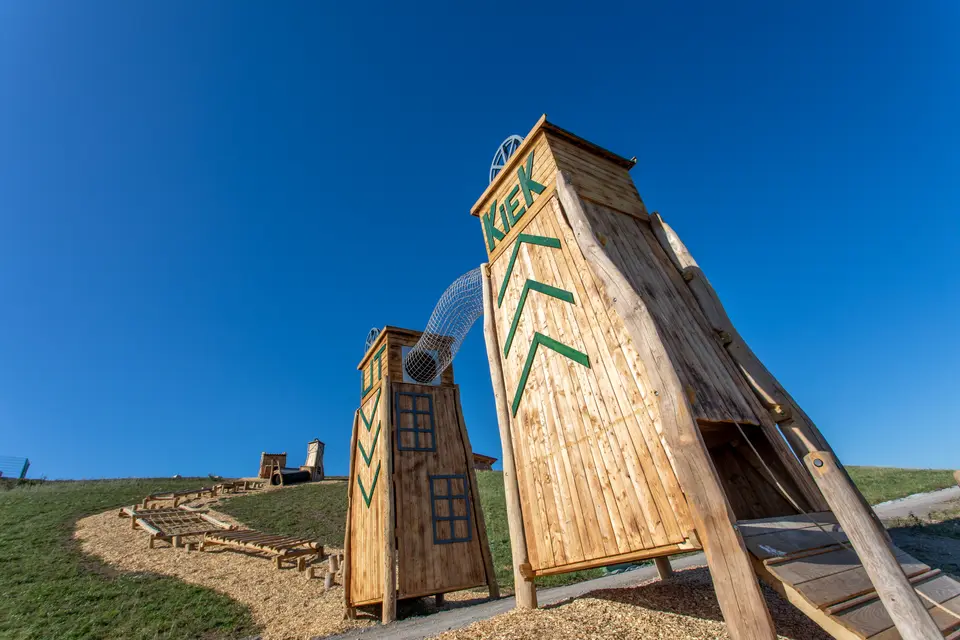
The nature experience tower is a unique feature for the region due to its special location on the edge of the Geest and offers visitors a landscape experience unique in Northern Germany.
Nature experience and enjoyment
From the embankment, 63 m above sea level, you can see the diverse Geest landscape, the lowland areas of the Hache, and further away the European and neighboring landscape protection areas. Every direction offers a different nature experience. Here you can experience the vastness far away from the noise of civilization.
In recent years, a variety of biotopes and small habitats have been newly created on the site, some of which are freely accessible:
Orchards of old traditional fruit varieties have been planted both in the fenced area and in the freely accessible area. They provide ideal hunting grounds for bats, a food source for various insect species, and with the aging trees, ideal breeding grounds for little owls. If you like, you can try the different fruits from the trees.
On the north and east of the site, hedge networks provide mammals and open field animals with food and shelter. Hedge-nesting bird species use them as nesting and feeding sites; butterflies, beetles, and grasshoppers love the herb edges in front of the hedges. Due to extensive use of large parts of the site, various wild herbs have re-established themselves: hop clover, tansy, oxeye daisy, yarrow, cow parsley, and many other herbs enrich the biodiversity.
A visit to Hoher Berg is worthwhile – not only for the unique view of the Weser glacial valley and the Hanseatic city of Bremen – but also because of its integration into the scenic Geest landscape and the unique experience of vastness and nature.
The site is also available for small groups to hold celebrations, and the fire pit may be used (please observe onsite instructions). Registration with the city of Syke is required for this.
The contact for events is the Culture and Tourism Office (Tel. 0 42 42 - 164 220).
About the history of Hoher Berg
On the 4.8-hectare site, in the mid-1970s during the Cold War, the US forces built an anti-aircraft missile station. On the highest remaining embankment, radar domes were installed on concrete slabs to detect "the enemy." The American soldiers left the position in the mid-1980s, followed by the German soldiers in 1987.
In the following years, the former military site was used for agriculture. In 2004, the city of Syke acquired the area. With support from EU funds, the "Cultural Landscape of the Geest" project (see information board at the entrance) was developed.
To connect the existing offerings on Hoher Berg and to further develop them specifically for nature-based tourism, the city launched a student design competition in 2008 in cooperation with Bremen University of Applied Sciences, Department of Architecture. The goal was to develop a professional design for a "nature experience tower." Just three years later, the newly built observation tower was inaugurated.
Nature development area
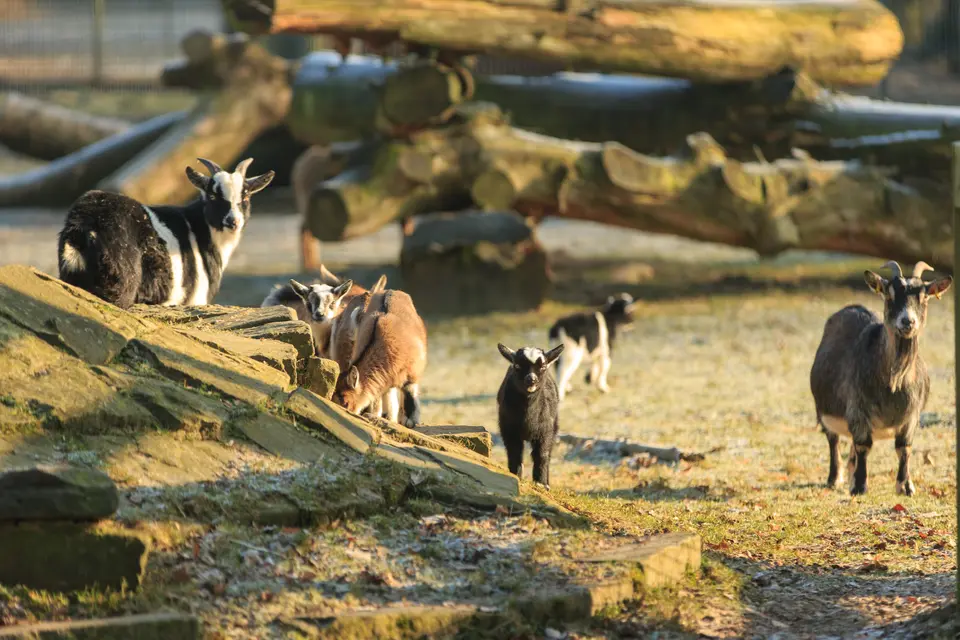
In the fenced nature development area, biotopes have been further developed or newly designed. These include small bodies of water with typical shore and water plants. A nature trail with Geest-typical woody plants has been laid out, summer quarters for bats, deadwood piles, and extensively used meadows. A small herd of endangered sheep breeds – the Rough Wool Pomeranian Sheep and the Coburg Fox Sheep – grazes the site.
The sheep herd is cared for year-round by the nearby Archehof Evers farm. From early spring to late autumn, these very hardy animals can stay outdoors. Supplementary feeding is provided when food is scarce.
Over time, a diverse bird and insect fauna has established. Wren, green and great spotted woodpeckers, tits, and house sparrows inhabit the trees and shrubs. The sparrows use bird nesting boxes hung by NABU. Grey wagtails and yellowhammers can be spotted on the site, and partridges and pheasants take advantage of the seed offerings of the various grasses and herbs. They are often found near the dead hedge rows. As migrants, the bird species common whitethroat and northern wheatear have been observed here, finding suitable habitats. Kestrels and common buzzards use the tall trees and buildings as perches for hunting.
The small bodies of water are home to the crested newt, which is important for Natura 2000 – a contiguous ecological network of European protected areas. The crested newt is listed as an amphibian species on the Red List of endangered species, as its populations in Europe have been steadily declining.
Wild herbs and grasses attract numerous butterflies and grasshoppers. Brimstone, orange tip, red admiral, painted lady, and other species find sufficient herbs and grasses suitable for laying eggs. Due to the extensive sheep grazing, they can complete their developmental stages through to butterflies and reproduce. The ponds and orchards serve as hunting grounds for bats, which sleep during the day in boxes hung on a building by NABU.
A variety of meadow and roadside herbs have developed, over 30 different species. These include cranesbill, field and hare clover, tansy, crowfoot, mugwort, several thistle species, and many more.
Especially old tall apple, pear, and cherry varieties such as Danziger Klarapfel, Moringer Rosenapfel, Kaiser Wilhelm apple, Diels butter pear, large Katzenkopf, pastor pear, large black cartilage cherry, and Spanish cartilage cherry are interesting for insects and fruit-eating animals.
Loyalty is coming to Hoher Berg Syke
Soon you'll collect stamps and unlock rewards at the places you love — right inside Yayando. Want a heads-up when it goes live?
Details can change — please confirm important info with the venue.